

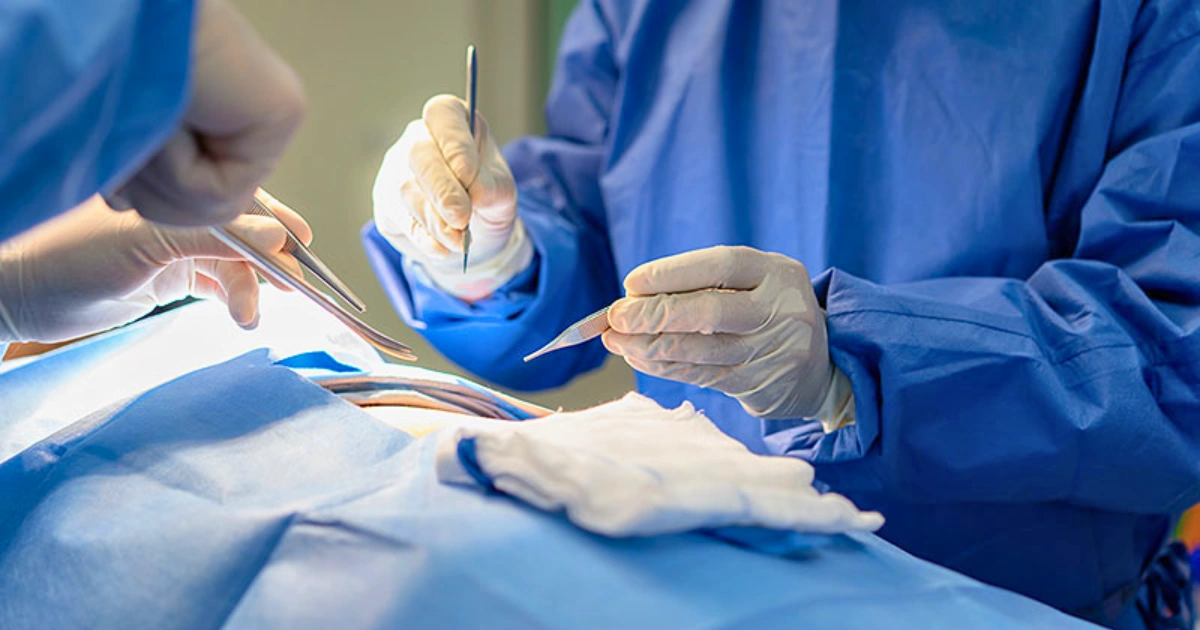
Necessary Surgery During Pregnancy: Laparoscopy for Cysts and Ectopics Explained
Is it safe to have surgery while pregnant? Yes, surgery can be safely performed during pregnancy if it is medically necessary to protect the health of the mother or the baby. Laparoscopic (keyhole) surgery is the preferred method for treating conditions like persistent ovarian cysts, appendicitis, or ectopic pregnancies. At Mapusa Clinic in Goa, Dr. Milind Colvalcar utilizes specialized techniques and fetal monitoring to ensure that surgical intervention is minimally invasive, reducing recovery time and maximizing safety for the pregnancy.
When Waiting Isn’t an Option
Finding out you need surgery while pregnant is a daunting experience for any mother. Whether it is an unexpected ovarian cyst or an urgent ectopic pregnancy, the primary concern is always: “Will my baby be safe?”
In Goa, Mapusa Clinic is one of the few centers equipped with the specialized expertise to bridge the gap between High-Risk Obstetrics and advanced Minimally Invasive Procedures.
Why Surgery Might Be Needed During Pregnancy
While we always prefer conservative management, certain conditions require immediate surgical intervention to prevent complications:
- Ectopic Pregnancy: A life-threatening condition where the embryo implants outside the uterus (usually in the fallopian tube). Immediate Laparoscopic Surgery is required to prevent rupture.
- Ovarian Torsion: A cyst that causes the ovary to twist, cutting off blood supply. This requires urgent untwisting to save the ovary.
- Large or Persistent Cysts: Cysts that continue to grow or cause severe pain may be removed to prevent rupture during labor.
The Laparoscopic Advantage for Expectant Mothers
Historically, pregnancy meant “open” surgery with large incisions. Today, Dr. Milind Colvalcar uses advanced laparoscopy (keyhole surgery) for pregnant patients.
- Smaller Incisions: Less trauma to the abdominal wall.
- Reduced Pain: Minimizes the need for strong post-operative medications.
- Faster Mobilization: Reducing the risk of blood clots, which is vital during pregnancy.
- Safety First: We use specialized entry techniques and lower-pressure gas to ensure the uterus is never disturbed.
Specialized Care: The Entity Network
Managing surgery during pregnancy requires a multi-disciplinary approach.
- Fetal Monitoring: Our Prenatal Care team performs ultrasounds before and after the procedure to ensure the baby’s heart rate remains stable.
- Advanced Fertility Context: For patients who conceived through IVF Angels Goa, we take extra precautions to protect these precious pregnancies.
- Personal Expertise: On his authority hub, Dr. Milind Colvalcar notes: “The second trimester is typically the safest window for non-emergency surgical intervention, though our team is prepared for emergency surgery at any stage.”
Recovery and Wellness Post-Surgery
After a laparoscopic procedure, recovery is significantly faster. However, we continue to monitor you closely through our Other Gynecological Services (Post-Surgical Care). For long-term abdominal wellness and skin elasticity after surgery, the Glamgyno team provides guidance on prenatal physical therapy and scar management.
🏁 Trust the Experts in Goa
If you are facing a surgical decision during your pregnancy, you deserve a team that specializes in both surgery and obstetrics.
Consult with Dr. Milind Colvalcar for a Specialized Surgical Review at Mapusa Clinic.
Laparoscopy During Pregnancy & Ectopic Pregnancy Treatment in Goa – Frequently Asked Questions
1. Is laparoscopy safe for the baby during pregnancy?
Yes, laparoscopic (keyhole) surgery is generally considered safe during pregnancy, especially in the second trimester, which is often the safest window for surgical procedures.
Because it is minimally invasive, laparoscopy:
- Uses small incisions
- Causes less pain and blood loss
- Reduces recovery time
- Lowers the risk of complications
During the procedure, special precautions are taken to protect the uterus, and the baby’s heart rate is carefully monitored throughout surgery to ensure safety.
2. What happens if an ectopic pregnancy is not treated?
An ectopic pregnancy is a serious medical emergency if left untreated.
In this condition, the pregnancy develops outside the uterus — most commonly in the fallopian tube. If not treated in time, it can cause:
- Fallopian tube rupture
- Severe internal bleeding
- Life-threatening complications
Emergency treatment, often through surgery, is required to protect the mother’s health and preserve future fertility.
3. How long is the recovery after keyhole surgery during pregnancy?
Recovery after laparoscopic (keyhole) surgery is typically quick.
Most patients:
- Are discharged within 24 to 48 hours
- Experience minimal postoperative pain
- Resume normal prenatal routines sooner compared to traditional open surgery
Your doctor will provide personalized recovery instructions to ensure both maternal and fetal well-being.
Know more about Advanced Minimally Invasive Gynaecology Procedures: Faster Recovery, Less Pain